Word Explanation
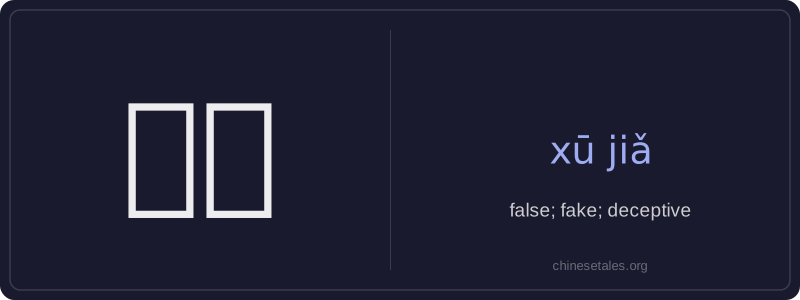
'虚假' (xū jiǎ) is an adjective meaning 'false', 'fake', or 'deceptive'. It combines two characters: 虚 (xū), which conveys emptiness, insubstantiality, or lack of truth; and 假 (jiǎ), meaning 'false', 'artificial', or 'pretended'. Together, they emphasize something that lacks authenticity—not just mistaken, but intentionally or fundamentally untrue. The word often carries a negative connotation, implying dishonesty or fabrication rather than mere error.
This term appears frequently in formal, written, or critical contexts—such as news reports about misinformation, legal documents discussing fraud, or everyday warnings about fake products or online scams. While it can describe objects (e.g., false documents), it’s also commonly used for abstract concepts like '虚假信息' (false information) or '虚假宣传' (deceptive advertising). It is rarely used in casual speech to describe minor inaccuracies—'错的' (wrong) or '不对' (not right) would be more natural there.
Example Sentences
Related Words
国语
‘Guó yǔ’ literally means 'national language'—
无论谁
‘无论谁’ (wú lùn shéi) is a pronoun meaning
外语
‘外语’ literally means ‘outside language’ —
亲笔
‘亲笔’ literally means ‘one’s own hand’—comb
面条
‘面条’ (miàn tiáo) literally means ‘flour str
认同
‘认同’ (tóng rèn) is a verb meaning ‘to ident
短袜
‘短袜’ (duǎn wà) literally means ‘short sock
规范
规范 (guīfàn) is a versatile word meaning 'stand